




















Post
43
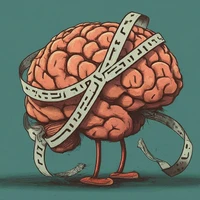
Human brains don't recreate every pixel to understand the world!
Most current models in genomics, proteomics, and single-cell transcriptomics rely on generative objectives like masked language modeling or next token prediction. While effective, these architectures waste significant capacity reconstructing raw, noisy sequence details that may not carry functional biological meaning.
But a promising, more efficient alternative is emerging: Joint-Embedding Predictive Architecture (JEPA)
Originally introduced by Yann LeCun for computer vision, JEPA is a non-generative, self-supervised learning (SSL) framework. Instead of predicting raw inputs, it operates as a world model that predicts abstract semantic embeddings in latent space.
Recently, the JEPA framework (and its more efficient LeJEPA variant) has been adapted into the biological sciences to develop performing foundation models and to improve on already existing ones.
It's interesting how each adaptation modified and tailored JEPA to suit its specific biological domain, whether by experimenting with different backbones or complementing the objective with other loss terms.
For example, JEPA-DNA and ProteinJEPA used JEPA as a continual pre-training framework to enhance existing foundation models without training from scratch, while Cell-JEPA and JEPA-DNA employed a hybrid objective that combines the JEPA loss with a traditional language modeling loss.
The article below provides an overview of these implementations, along with others that came out this year. As always, your thoughts and feedback are welcome and highly appreciated!
Link to the article is in the first comment 👇
Most current models in genomics, proteomics, and single-cell transcriptomics rely on generative objectives like masked language modeling or next token prediction. While effective, these architectures waste significant capacity reconstructing raw, noisy sequence details that may not carry functional biological meaning.
But a promising, more efficient alternative is emerging: Joint-Embedding Predictive Architecture (JEPA)
Originally introduced by Yann LeCun for computer vision, JEPA is a non-generative, self-supervised learning (SSL) framework. Instead of predicting raw inputs, it operates as a world model that predicts abstract semantic embeddings in latent space.
Recently, the JEPA framework (and its more efficient LeJEPA variant) has been adapted into the biological sciences to develop performing foundation models and to improve on already existing ones.
It's interesting how each adaptation modified and tailored JEPA to suit its specific biological domain, whether by experimenting with different backbones or complementing the objective with other loss terms.
For example, JEPA-DNA and ProteinJEPA used JEPA as a continual pre-training framework to enhance existing foundation models without training from scratch, while Cell-JEPA and JEPA-DNA employed a hybrid objective that combines the JEPA loss with a traditional language modeling loss.
The article below provides an overview of these implementations, along with others that came out this year. As always, your thoughts and feedback are welcome and highly appreciated!
Link to the article is in the first comment 👇